
|
What is a Midwife?
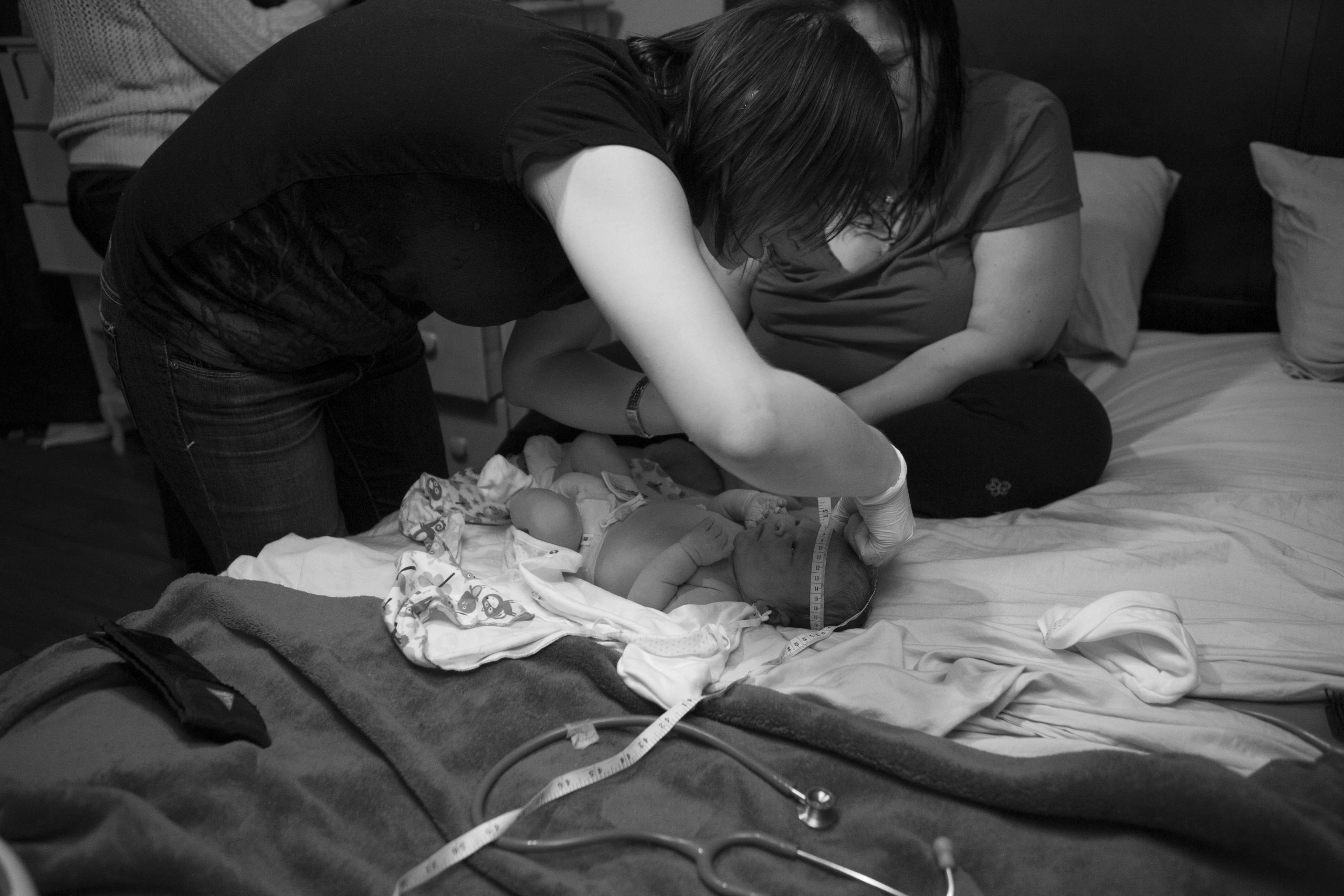
The midwife is a skilled practitioner who provides primary care for the full duration of pregnancy, birth and postpartum until
6 weeks postpartum, for low risk women and their newborns. The midwife consults with and refers to specialists when necessary.
The midwife will use emergency measures within the scope of her practice if the need arises.
Womancare is comprised of 10 midwives who practise as a team. Upon entering into midwifery care you will be assigned to a team
of 2 midwives. Our goal is that you are equally comfortable with both members of your team, as most likely one of the two
midwives will attend your labour. One member of your team is on call 24 hours a day, 7 days a week, and 365 days a year. In
rare circumstances, such as illness or many births occurring simultaneously, another midwife who is not a part of your team
will be called on to provide your care. Two midwives attend each birth; these will typically include one midwife from your
team and another member of the practice.
Fundamental to midwifery care is the understanding that a woman's caregivers respect and support her so that she may give
birth safely, with power and dignity. The midwife sees pregnancy and childbirth as a normal state for the healthy woman and
believes that unnecessary intervention is an interruption of a healthy process.
Philosophy of Care
Womancare Midwives' philosophy of care is based on respect for the
birth process and women's ability to give birth. We are guided by
the principles of continuity of care, non-authoritarian relationships,
client as the primary decision maker, choice of birth place, appropriate
use of technology, and time spent with women to develop non-authoritarian
relationships and provide information to facilitate informed decisions
by the client.
Pregnancy
is a Time of Health
The maintenance and promotion of health
throughout the childbearing cycle are central to midwifery care.
Midwives focus on preventive care and the appropriate use of technology.
Midwifery care is based on a respect for pregnancy as a state of
health and childbirth as a normal physiologic process. Midwifery
care respects the diversity of women's needs and the variety of
personal and cultural meaning which women, families and communities
bring to the pregnancy, birth and early parenting experience.
Continuity of Care
Care is continuous, personalized and non-authoritarian. It responds
to a woman's social, emotional, cultural and physical needs. The
same midwives provide care throughout pregnancy, labour and after
the birth.
Informed Choice
Midwives encourage the woman to actively participate in her care
throughout pregnancy, birth and the postpartum period and make choices
about the manner in which her care is provided. Midwives promote
decision-making as a shared responsibility, between the woman, her
family (as defined by the woman) and her caregivers. The woman is
recognized as the primary decision maker. Midwifery care includes
education and counselling, enabling a woman to make informed choices.
Responsibility for wellbeing rests with both those who offer health
care and each individual seeking health care. Better health care
is attained when individuals make informed decisions regarding their
care.
Choice of Birthplace
Midwives respect the woman's right to choice of caregiver and place
of birth in accordance with the Standards of Practice of the College
of Midwives. Midwives are willing to attend birth in a variety of
settings, including birth at home. Women have the choice of delivering
at home or in hospital. Womancare Midwives have privileges at London
Health Sciences Center and St. Joseph's Hospital.
There are risks and benefits to any birth setting. Birth is essentially
a normal process that can sometimes become a medical process. While
birth is, for most women, uncomplicated, complications or emergencies
can arise. Although approximately 80% of complications can be detected
prenatally, some will arise spontaneously and unpredictably during
labour and delivery. In the event a homebirth has been planned,
and complications arise, most often transport to a hospital takes
place in a straightforward manner. There are, however, some rare,
serious emergencies, which could arise in any birth setting. It
is important to recognize that in these rare situations, sometimes
the technology available only in a hospital setting may make a difference
to the well being of the newborn or mother. It is also true that
even with the assistance of technology, a good outcome cannot be
guaranteed when these rare emergencies arise in any birth setting.
Parents'
Responsibilities
You are expected to be responsible for your health. This includes
eating a healthy diet, exercising and getting adequate rest. You
will benefit from learning about the process of labour and birth.
We need to be informed of any relevant event or information that
might affect your pregnancy or birth, including any pertinent medical
information.
Active participation and decision making together with your caregivers
is expected throughout your care. We request that you refrain from
the use of restricted substances. Please tell us about any drug
that you take, prescription or over the counter. This includes cigarettes,
recreational drugs, alcohol, alternative remedies and vitamin supplements.
|